2/20/2026


In the tech world, there is a legendary concept called the Code Review. It’s that moment when you take something you’ve spent hours building, hand it to a Senior Dev, and watch them find the one fatal flaw you were too close to the project to see.
It’s humbling. It’s frustrating. And it’s the only way to get better.
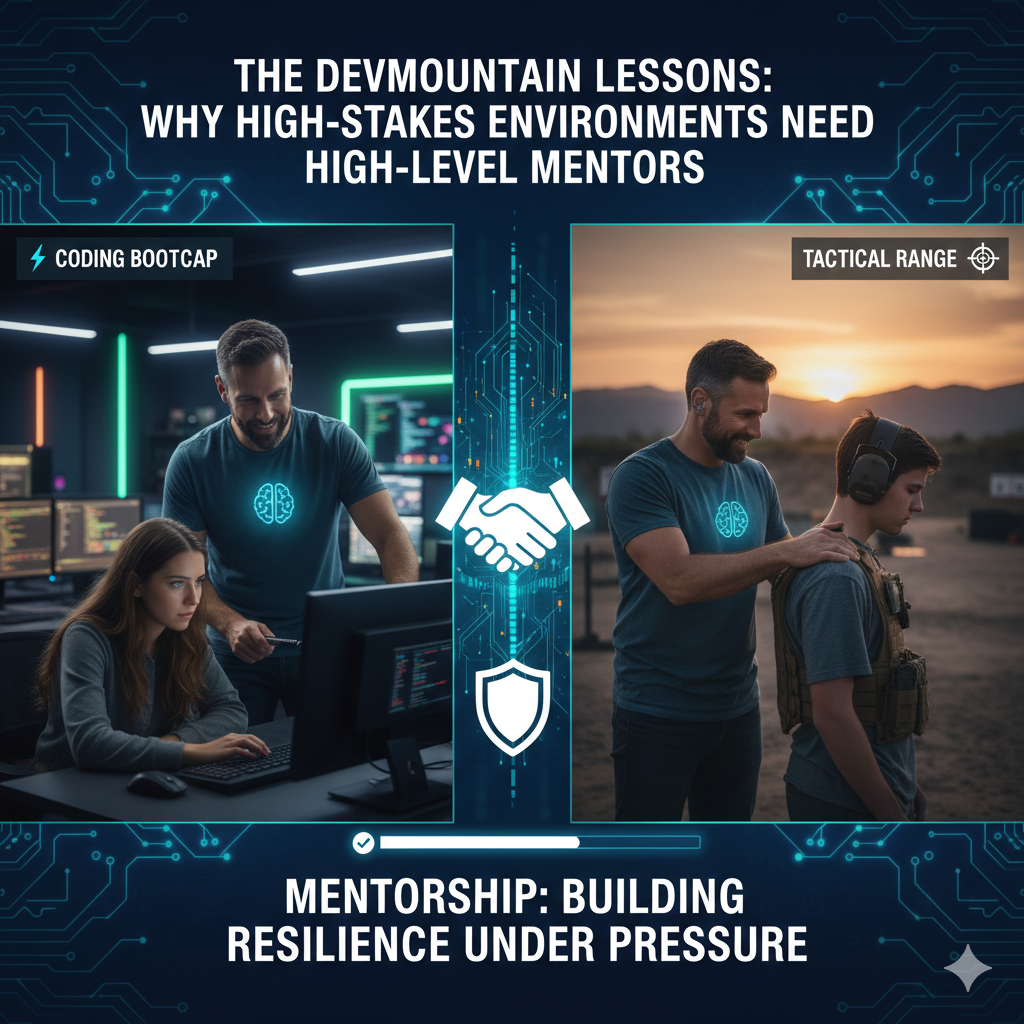
When I was mentoring at DevMountain, I saw this play out daily. We were taking students and throwing them into a high-intensity, 12-week immersive environment. It was a "sink or swim" scenario where the stakes felt like life or death for their careers.
What I realized there—and what I see every time I step onto a firing range—is that information is not the same as transformation. You can have all the data in the world, but without a mentor to help you apply it under pressure, you’re just a walking library of unused potential.
In programming, we call it Tutorial Hell. It’s when you watch endless videos, follow along with the instructor, and feel like a genius—until the video ends and you’re staring at a blank text editor. Suddenly, you realize you don't actually know how to build anything; you just know how to mimic.
The tactical world has the same trap. You can watch "Guntubers" all day long. You can memorize the specs of every optic on the market. But if you haven't had a mentor stand behind you and tell you exactly why your shots are pulling low and left when the timer starts beeping, you are in Tactical Tutorial Hell.
Whether you are deploying code to a million-dollar enterprise server or deploying a firearm to protect your family, the stakes leave zero room for "maybe."
The "Self-Taught" badge is a point of pride for many, but in high-stakes environments, it's often a mask for ego. I’ve spent my life as a developer, a pastor, and an instructor. The common thread? The best leaders are the best students.
If you want to move from a hobbyist to a professional—whether in the IDE or on the range—stop gathering information and start seeking a mentor. Find someone who will tell you the truth, especially when your "code" is broken.
When you are researching training, gear, or even coding solutions, your search history is being packaged and sold to advertisers (and potentially worse actors). Use a privacy-focused search engine like DuckDuckGo or Brave Search to keep your "learning path" private. You don't need the whole world knowing exactly what vulnerabilities you're currently trying to patch—digitally or physically.