
4/6/2026
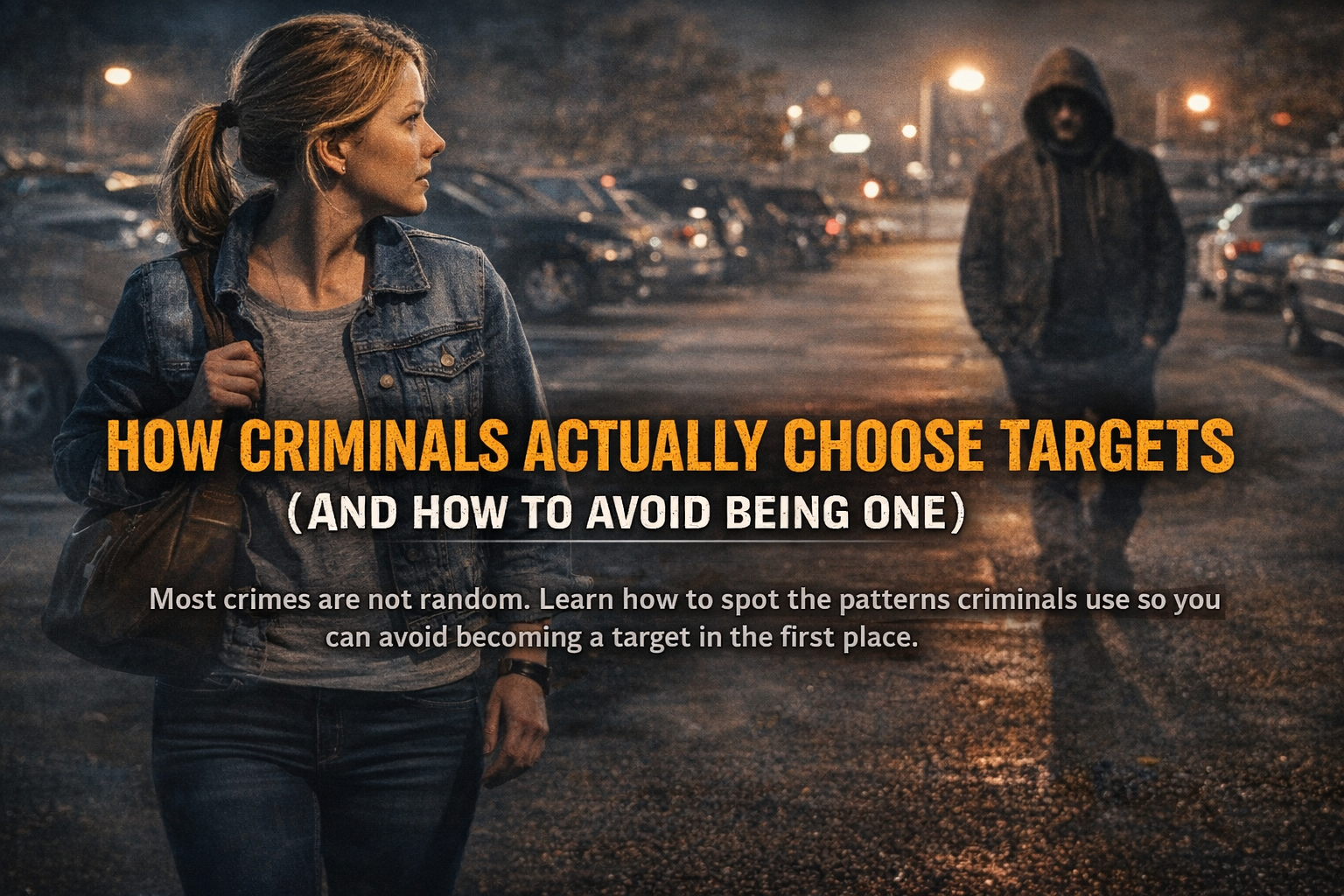

Most crimes are not random.
Research and interviews with offenders consistently show that criminals tend to select targets based on opportunity and perceived vulnerability.
Understanding how this process works can help you avoid becoming a target in the first place.
Most criminals prefer the path of least resistance.
They are far more likely to target someone who appears distracted, unaware, or vulnerable than someone who appears alert and confident.
This means that simple habits can significantly reduce risk.
People who walk with confidence, maintain awareness of their surroundings, and make eye contact are often perceived as more difficult targets.
On the other hand, individuals who appear distracted or unsure of their surroundings may be perceived as easier targets.
Small behavioral changes can have a large impact.
Certain environments create more opportunities for crime, including:
Recognizing these environments allows you to adjust your awareness and behavior.
In many cases, criminals will test a potential target before committing to a crime.
This might involve:
Recognizing these behaviors early allows you to create distance and avoid escalation.
The most effective personal safety strategy is not equipment—it is awareness.
By paying attention to your surroundings and recognizing suspicious behavior early, you can often prevent situations from developing.
In our situational awareness workshops, we examine real-world incidents and discuss how awareness and behavior influence safety outcomes.

