3/13/2026

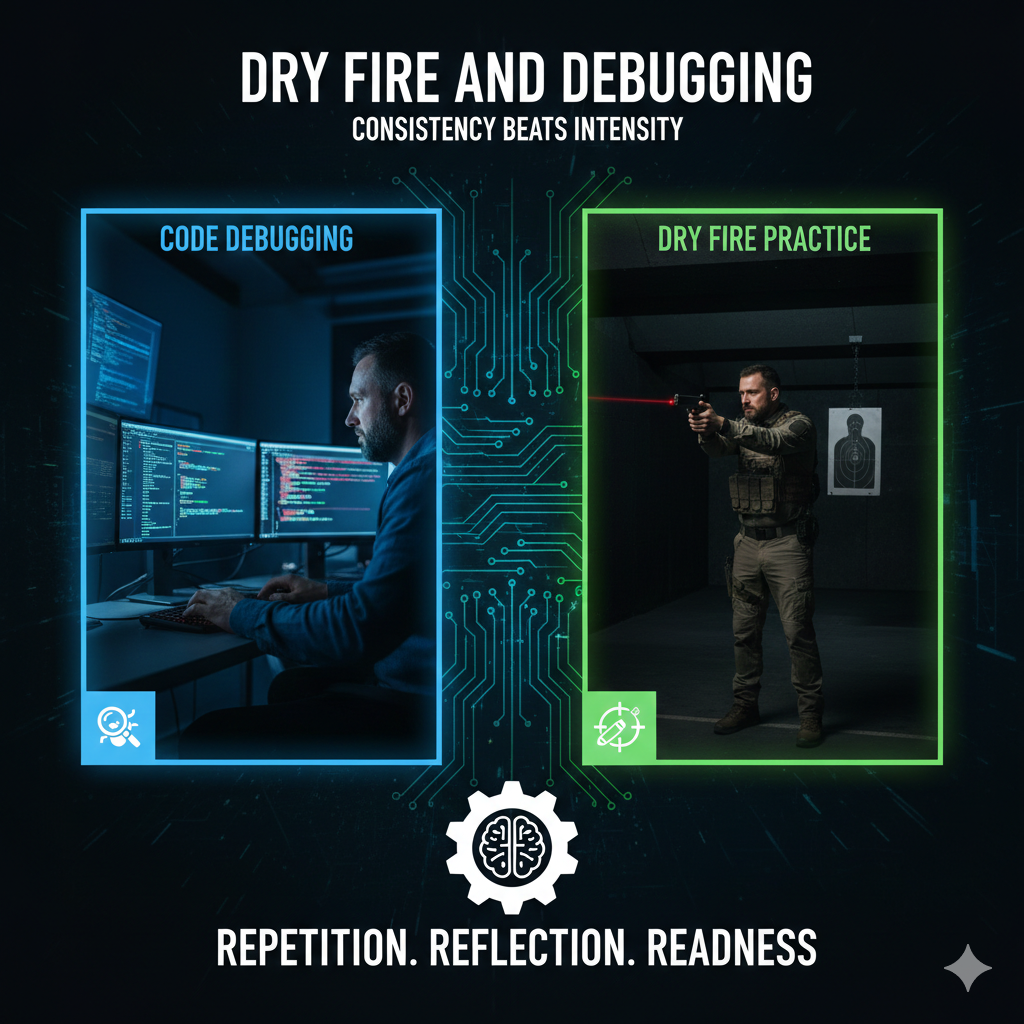

No developer writes a thousand lines of perfect code on the first pass. We write a block, we run it, it fails, and we debug. High-level shooting follows the exact same lifecycle. If you only "run your code" (shoot live ammo) once a month, you aren't debugging—you're just guessing.
In the dev world, we use Linters to catch syntax errors before the program even runs. In the tactical world, Dry Fire is your linter. It’s the tool that catches your flinches, your poor grip, and your slow draw-to-first-shot without the noise, recoil, and cost of live ammunition.
Most people find dry fire boring because it lacks feedback. If you don't know why your sights moved, you can’t fix the bug. This is where I lean on technology.
I’m a huge advocate for the MantisX systems and am appreciative of The Warrior Chicken for their foresight to sell MantisX products. Think of the Mantis X10 as a Real-Time Debugger for your trigger press. By attaching a high-precision sensor to your firearm, it tracks the movement of your barrel during the trigger pull and sends that telemetry to your phone.
Consistency beats intensity every single time. Five minutes of focused "debugging" every day using a tool like Mantis is worth more than a four-hour marathon at the range once a quarter. Stop making excuses and start running your drills. If you aren't testing your skills against a timer and a sensor, you’re just playing with an expensive paperweight.
In programming, we have a saying: "Don't tell me what the code is supposed to do; show me what it's actually doing." >
Use the Mantis Laser Academy or the X10 Elite to get objective data. Your "feel" can lie to you, especially under stress. Data-driven feedback is the only way to ensure that when you "Deploy to Production" (a real-world defense scenario), your code doesn't crash.